Toxicity tests on the Mason bee (Osmia spp.)
Toxicity Test on Mason bee (Osmia spp) – New eco-toxicological test available at the Staphyt laboratory.
At Staphyt, we are strengthening our expertise in ecotoxicology testing with the addition to our portfolio of the Mason bees (Osmia spp.), Acute Oral and contact Toxicity and Chronic Oral Toxicity Test. Acute and chronic oral tests are currently undergoing validation (international interlaboratory test), and the acute contact test is already available in accordance with OECD Guideline 254, 2025.
The ecotoxicology testing on Mason bees (Osmia spp.) was designed because solitary bees, particularly Osmia bees (O. bicornis, O. cornuta, etc.), are also exposed to pesticide residues in natural conditions. Current risk assessment schemes rely on a single species, the highly social western honey bee (Apis mellifera). There are concerns that, given its rather unique biological traits, the western honey bee does not correctly represent other bee species. The varying sensitivity of Mason bees justifies their inclusion in pollinator risk assessments (EFSA, 2013).
Why these tests?
These are standardized protocols adapted to the biology and behavior of Osmia spp. species in order to assess acute contact and oral toxicity and chronic oral in solitary bees under laboratory conditions. These protocols are based on the existing guideline for chronic toxicity testing in Apis mellifera. (OECD 213 and OECD 214, 1998 and OECD 245, 2017)
Staphyt laboratory participated in the International ring test on the Chronic Oral Test.
The work is being carried out within the APITOX group, which specializes in the development and validation of standardized toxicological protocols for bees, working in conjunction with the ICPPR.
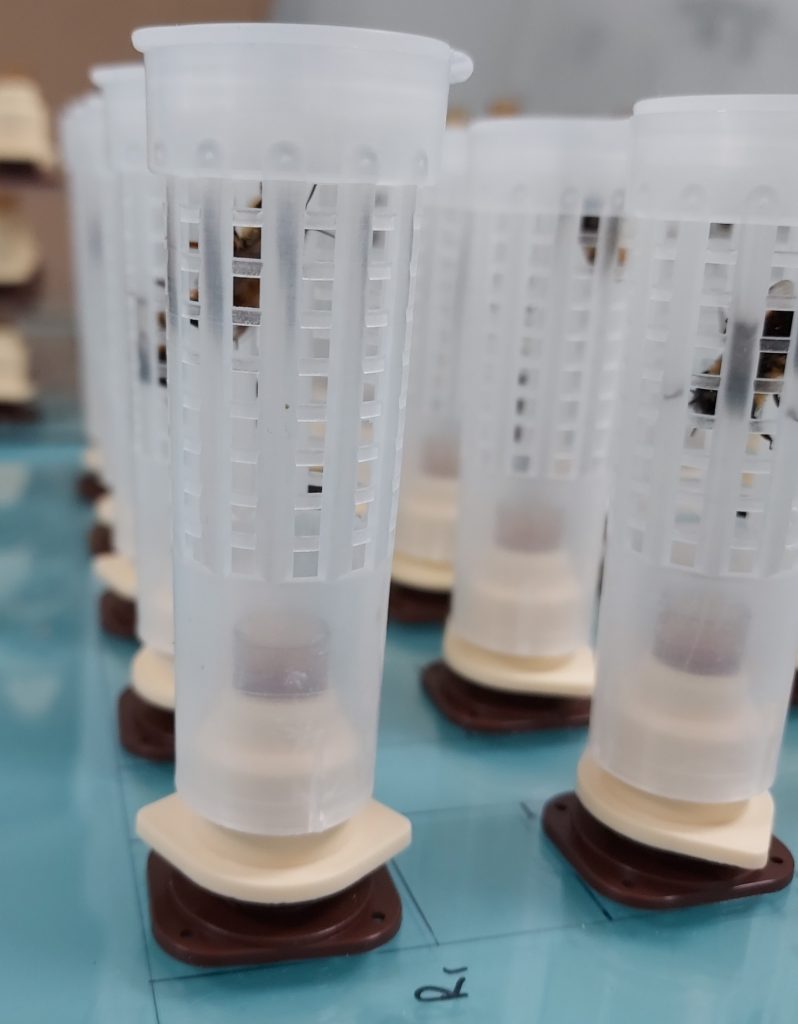
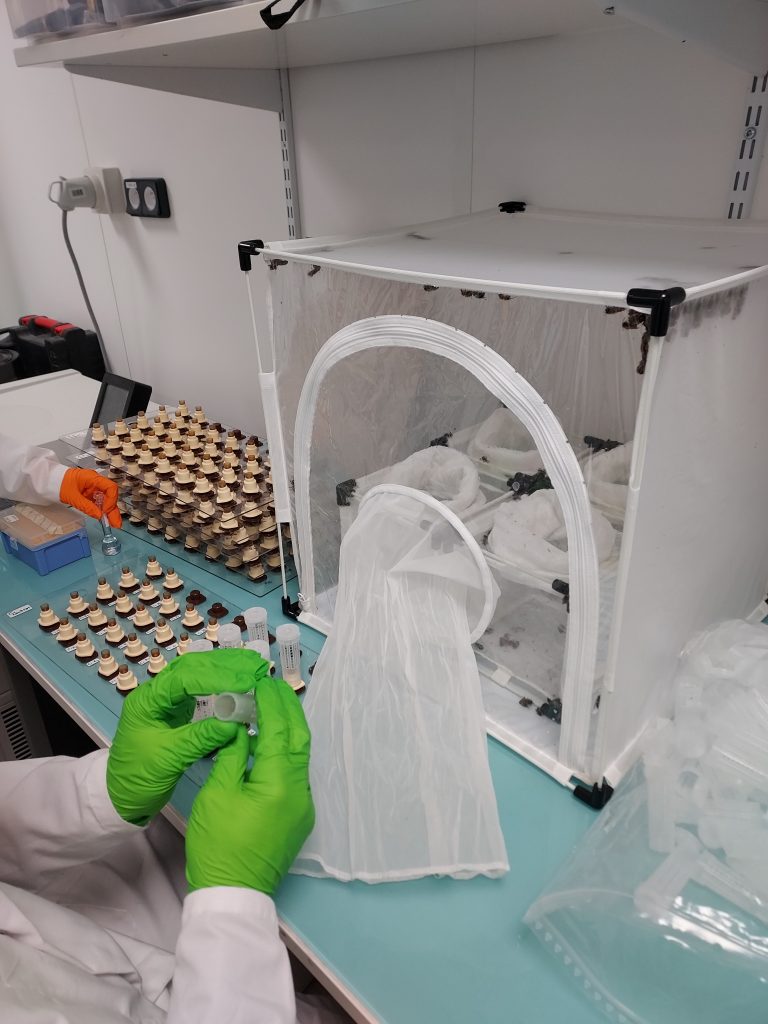
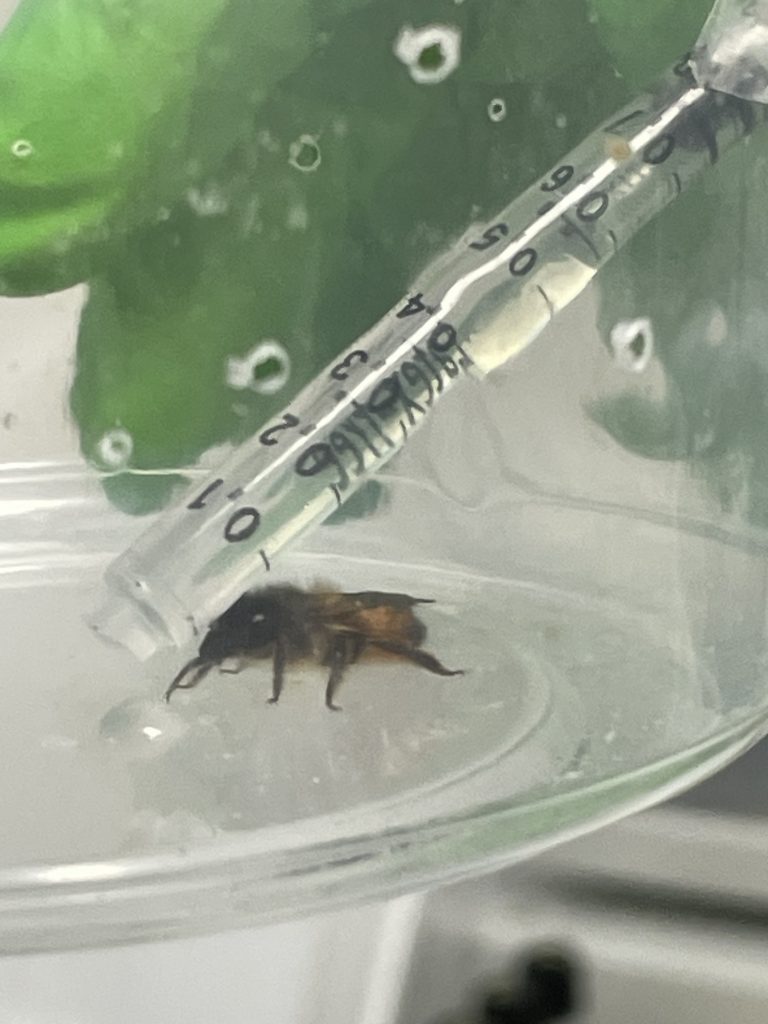
The Osmia cocoons were incubated under controlled conditions, and only females that emerged during the peak hatching period were selected for testing. After a fasting period and individual weighing, 234 females were randomly divided into six groups corresponding to five increasing concentrations of dimethoate (0.125 to 2 mg/kg) and a control group. The bees were exposed individually, in standardized cages with a volume of 350 cc, to a 33% w/w sucrose solution containing the test substance (dimethoate), provided ad libitum for 10 days.
The implementation of the Acute and Chronic Oral Toxicity Tests have been evaluated in Staphyt’s laboratory in Valence, France. Reference substance with known oral toxicity effects was tested: Dimethoate.
Results obtained using reference item:
A clear dose-response relationship confirming oral toxicity and the feasibility of an acute or chronic oral toxicity protocol adapted to solitary bees.
Conclusion:
Test results as expected: A dose-response for the reference item Dimethoate.
We have successfully demonstrated our ability to perform these tests in our laboratory. In addition, we are also able to perform the Acute Contact test (OECD 254) based on our experience on Apis mellifera (OECD 214) and Bombus terrestris (OECD 246).
Congratulations to our ecotoxicology testing team for this latest addition to our suite of ecotoxicology tests.
To learn more or discuss a project, contact: contact@staphyt.com