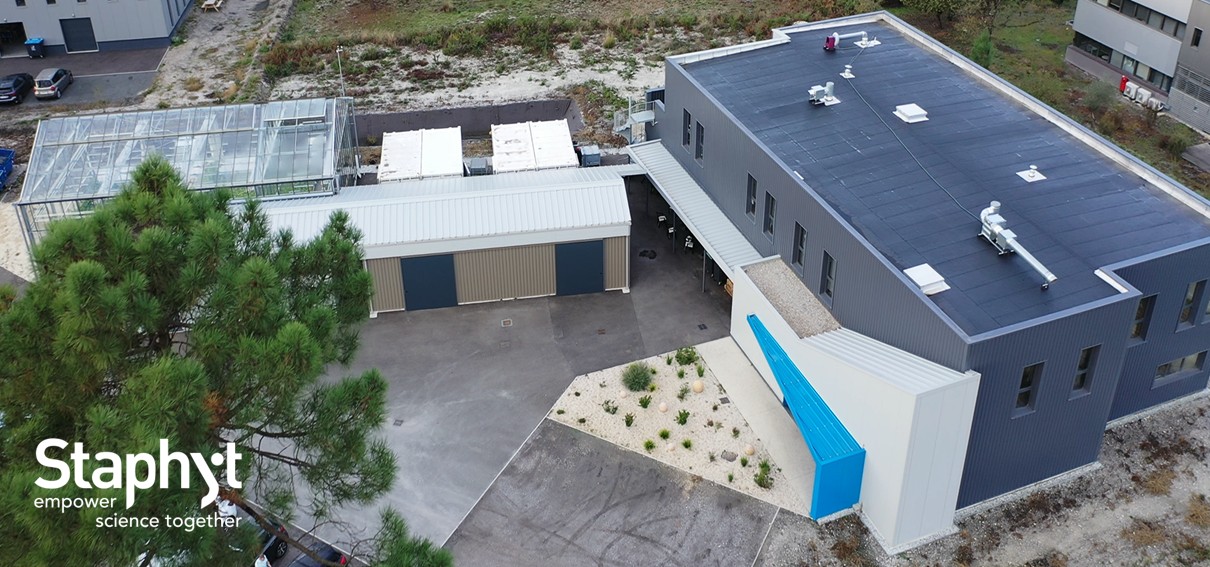
Example of an Envirotyping Trial: Our Greenhouse site in Sevilla, Spain station
What is Envirotyping ?
A tool to contextualize and strengthen the agronomic evaluation of biosolutions. The efficacy of biosolutions, such as biocontrol products and biostimulants is highly variable across environments. This variability challenges the interpretation of trial data and limits the extrapolation of results across locations and seasons.
Envirotyping offers an integrative framework to characterize the environmental context of field trials by analyzing pedoclimatic, agronomic, and stress-related variables. By contextualizing crop responses, envirotyping enhances the robustness of agronomic evaluations, improves reproducibility, and facilitates cross-site and multi-year comparisons.
Localisation
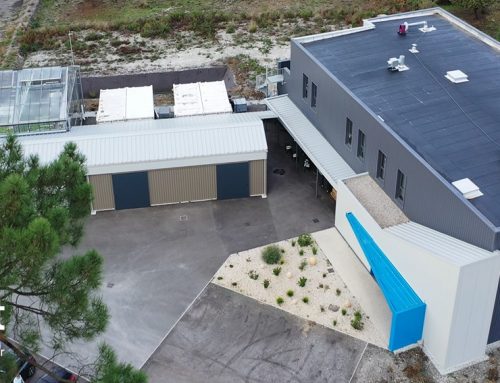
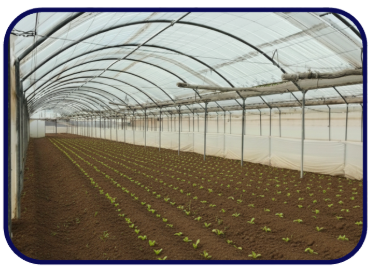
The greenhouse site offers a covered area of 1250m², ideal to assess Biostimulant products under hydric stress or to demonstrate quality traits or nutrition benefit, on vegetables crop.
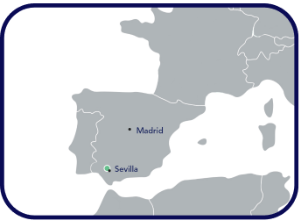
The site is located in Los Palacios y Villafranca, a municipality located in the Bajo Guadalquivir region, about 30 km southwest of Seville. It is a historic area of intensive agriculture, with a predominance of horticultural crops, citrus, and cereals. The region has easy access to Seville markets and the port of Seville for export.
Soil
Basic Soil Properties
- pH (H2O): 8.26
- pH (KCl): 7.76
- Organic Matter: 2.22 % DM
- Organic Carbon: 1.29 % DM
- Total Nitrogen: 0.119 % DM
- C/N ratio: 10.84
- Electrical conductivity: 0.22mS/cm
- Saturation point: 25.9%
- Field capacity (FC): 13.8%
- Porosity: 24.6%
Soil Texture (%)
- Clay: 31.5
- Fine silt: 22.0
- Coarse silt: 11.0
- Fine sand: 13.0
- Coarse sand: 22.5
Exchangeable Nutrients
- Ca: 3.68 g/kg
- Mg: 252 mg/kg
- K: 114 mg/kg
- Fe: 38.2 mg/kg
- Zn: 17.3 mg/kg
- Cu: 9.4 mg/kg
Phosphorus Status
- Olsen P (calculated): 65.3 mg/kg
- Olsen P (ICP-AES): 28.5 mg/kg
Biological Activity
- Total microorganisms: 1.5E+07 events/g
- Bacteria (total): 1.3E+07 events/g
- Fungi (total): ≤ 4.9E+05 events/g
- Fungi/Bacteria ratio: 0.026
The soil shows a strongly alkaline reaction with no salinity constraint. Although its fine texture allows water storage, the fraction readily available to plants is limited, leading to a rapid onset of water stress during drying phases. This soil therefore provides a well-controlled and discriminant context for hydric stress evaluation.
The microbial community is abundant but mainly bacterial, providing a relevant context to assess biostimulant effects on nutrient use efficiency and stress tolerance.
Main Crops and Production Systems
The area combines open-field cultivation and greenhouse production. Under greenhouses, predominant crops include short-cycle horticultural crops (tomato, pepper, eggplant, melon), they are mainly used for early crops.
Climate
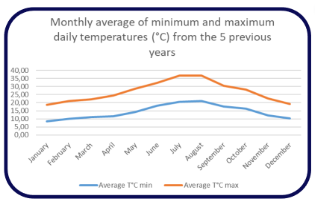
Mediterranean-continental climate: from May to October, outside temperatures are high, more than 30°C for the maximum in summer and not less than 15°c for the minimum temperatures in May and October. Values inside the glasshouse being slightly higher than the outside ones. Taking into account the average of 2900 hours of sunshine exposure per year, the weather conditions lead to a significant water need from the crop over the period. These conditions plus an appropriate management of the irrigation are favorable to the apparition of an hydric stress.
Water and Irrigation
Irrigation relies mainly on groundwater (Guadalquivir aquifer) and irrigation infrastructure managed by the Guadalquivir River Basin Authority. Water management is critical during drought periods.
On the site, the use of localized drip irrigation ensures water efficiency during summer and allows to pilot the irrigation independently on the different blocs.