PPP & PNP Regulatory overview: October 2026
Dive into our team’s expertise on the Plant Protection and Plant Nutrition markets.
Once a month, our experts will gather all the news and updates in PPP and PNP markets. They will select major news to help you navigate in the regulations framework.
For a more comprehensive review, we offer a Regulatory Watch subscription. Don’t hesitate to contact us.
Stay up to date by subscribing!
Plant Protection
1. Draft decision: Extended deadlines for 7 a.s. Renewal -renewal dossier submission)
An EU Commission draft decision has been set under public consultation on September 18th. This decision creates a work programme for the assessment of applications for renewal of the approvals of low-risk active substances expiring in 2030 and 2031 in accordance with Regulation (EC) No 1107/2009 of the European Parliament and of the Council.
Isaria fumosorosea strain Apopka 97, COS-OGA, cerevisane, Pepino mosaic virus strain CH2 isolate 1906, ferric phosphate, Saccharomyces cerevisae strain LAS02 and Trichoderma atroviride strain SC1 (namely ‘the seven low-risk active substances’) were approved under Regulation (EC) No 1107/2009 and listed in Part D of the Annex to Commission Implementing Regulation (EC) No 540/20112, and their approvals will expire between 22 April 2030 and 6 July 2031. Part E of the Annex to Commission Implementing Regulation (EU) No 686/20123 allocates for each of those active substances a rapporteur and a co-rapporteur Member State for the purposes of the renewal procedure.
2. Public consultation on the EFSA Draft Protocol on Emergency Authorisations of Herbicides, Soil Fumigants, Nematicides and Other Pesticides
Following the two previous consultations on draft protocols covering fungicides and bactericides as well as acaricides and insecticides, EFSA’s Environment, Plants & Ecotoxicology Unit is launching a public consultation on the Draft protocol for the evaluation of emergency authorisations of herbicides, soil fumigants, nematicides and other pesticides not covered by the 2 previous related protocols, submitted under Article 53 of Regulation (EC) No 1107/2009. Interested parties are invited to submit their comments on the draft protocol by the 3rd of November 2026.
3. French note on bees
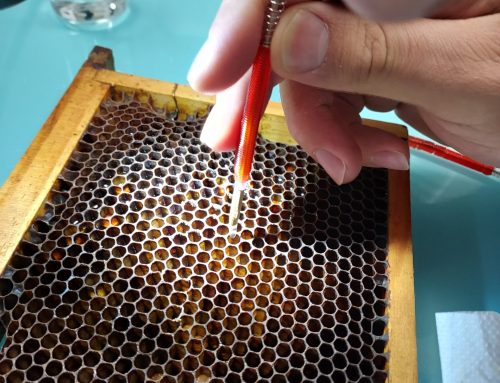
The last French note on bees was published on February 13th 2026. The bee requirements were implemented in a National note first on July 1st, and then more recently on September 4th.
The purpose of this note is to clarify the regulatory framework regarding the protection of bees and other pollinating insects during the use of plant protection products and adjuvants, highlighting the consequences of these provisions for application submissions, the arrangements adopted in Anses decisions concerning the table of uses and general conditions of use, as well as the information displayed on the E-Phy website.
Plant Nutrition
1. European Fertilising Product Regulation (EU) No 2019/1009 consolidated version
A consolidated version of the FPR dated form 1st of July 2026, includes the amendments:
-
Digital Labelling Framework (Articles 6, 11a, 11b, and Annex III): Economic operators are now permitted to provide certain non-critical labelling details exclusively via digital labels (such as QR codes on packaging).
Essential safety and environmental protection information, including target crops, warnings, and physical dosage, must remain on the physical label.
Digital labels must remain accessible free of charge for at least 10 years, be searchable, support offline accessibility, and meet high usability standards for end-users.
-
Conformity Assessment Procedures (Annex IV): Revisions to Modules A1 and D1 streamline audit and testing requirements.
Module D1 shifts from raw output sampling frequencies to a predictable annual audit standard for products utilising recovered materials.
Additionally, accreditation requirements have been clarified for laboratories conducting mandatory thermal cycling and detonation resistance tests for high-nitrogen ammonium nitrate fertilizers (Module A1).
-
Component Material Categories (CMC 11): The update integrates rules established by Delegated Regulation (EU) 2024/2788 regarding the use and criteria for specific polymers listed under CMC 11.
2. Simplification of REACH requirements under Regulation (EU) No 2019/1009
According to the upcoming “Chemicals Omnibus VI” proposition, the extended REACh requirements under the FPR will be removed for CMC 1 ingredients, except for the most dangerous substances. The CMC 1 criteria will be amended as follows:
“CMC 1: VIRGIN MATERIAL SUBSTANCES AND MIXTURES, Point 2:
Where a substance, other than a polymer, is included in Part 3 of Annex VI to Regulation (EC) No 1272/2008 for the following hazard classes or categories:
-
Germ cell mutagenicity, category 1A or 1B;
-
Carcinogenicity, category 1A or 1B;
-
Reproductive toxicity, category 1A or 1B;
-
Specific target organ toxicity, repeated exposure, category 1;
-
Endocrine disruptor for human health, category 1;
-
Endocrine disruptor for the environment, category 1; and
-
Persistent, bioaccumulative and toxic or very persistent and very bioaccumulative properties
whose actual quantities placed on the market are lower than 10 tonnes per year, intentionally incorporated into the EU fertilising product, on their own or in a mixture, in a concentration equal to or greater than the cut-off values set out in Article 11(3) of Regulation (EC) No 1272/2008, shall have been registered pursuant to Regulation (EC) No 1907/2006, with a dossier containing:
(i) the information provided for by Annexes VI, VII and, insofar as relevant and available, Annex VIII to Regulation (EC) No 1907/2006, on the basis of available data, alternative methods pursuant to Article 13 and adaptations pursuant to Annex XI, and conducting new tests on vertebrate animals only as a last resort and where relevant, and
(ii) a chemical safety report pursuant to Article 14 of Regulation (EC) No 1907/2006 strictly limited to the exposure scenarios related to the agronomic use and the environment, unless explicitly covered by one of the registration obligation exemptions provided for by Article 9 (PPORD) of Regulation (EC) No 1907/2006, used exclusively for scientific research and development, Annex IV to Regulation (EC) No 1907/2006 or by points 6, 7, 8, 9 or 10 (only for magnesia) of Annex V to that Regulation.”
3. New French regulation “Socle commun”: publication of the latest texts and first amendment already on track
The final texts of the new regulation “Socle Commun” in France concerning fertilising materials were published in the French Official Journal on October 2, 2026:
-
Decree No. 2026-919 of 18/09/2026 setting the agronomic quality and safety criteria for fertilising products and growing media
-
Order of 18/09/2026 setting the maximum permissible inputs of trace elements and trace organic compounds during the use of fertilising products
-
Order of 18/09/2026 setting the values and assessment methods for safety criteria and end-of-waste status for fertilising products and growing media
Following the publication of these texts, a public consultation was immediately launched to amend the maximum permitted cadmium levels in certain fertilising products, as well as the maximum allowable inputs of this contaminant during application :
-
Public consultation open from 05/10/2026 to 09/11/2026
As a reminder, the “Socle Commun” will enter into force in France on January 1, 2027, and will impact all fertilising products marketed on French territory, with the exception of CE fertilisers.
In need for personalized regulatory advice to meet your specific needs? Whether you need assistance about compliance, product registration or any other regulatory issue, our experts are here to provide support: Geoffroy Moulin | Evelyne Güsken | Asha Hoque | Romain Galy | Jeanne Millan Bernal | Caroline Pigeat
Contributors: Pierre LAURENT | Manisha Armoogum | Dorothee Michelet | Liis Teubner | Elodie Belmas | Ismael Sánchez Pérez | Sanako Roy
Contact us or visit our website for more information: contact@staphyt.com
staphyt.commarkets.
Once a month, our experts will gather all the news and updates in PPP and PNP markets. They will select major news to help you navigate in the regulations framework.
For a more comprehensive review, we offer a Regulatory Watch subscription. Don’t hesitate to contact us.
Stay up to date by subscribing!
Plant Protection
1. Draft decision: Extended deadlines for 7 a.s. Renewal -renewal dossier submission)
An EU Commission draft decision has been set under public consultation on September 18th. This decision creates a work programme for the assessment of applications for renewal of the approvals of low-risk active substances expiring in 2030 and 2031 in accordance with Regulation (EC) No 1107/2009 of the European Parliament and of the Council.
Isaria fumosorosea strain Apopka 97, COS-OGA, cerevisane, Pepino mosaic virus strain CH2 isolate 1906, ferric phosphate, Saccharomyces cerevisae strain LAS02 and Trichoderma atroviride strain SC1 (namely ‘the seven low-risk active substances’) were approved under Regulation (EC) No 1107/2009 and listed in Part D of the Annex to Commission Implementing Regulation (EC) No 540/20112, and their approvals will expire between 22 April 2030 and 6 July 2031. Part E of the Annex to Commission Implementing Regulation (EU) No 686/20123 allocates for each of those active substances a rapporteur and a co-rapporteur Member State for the purposes of the renewal procedure.
2. Public consultation on the EFSA Draft Protocol on Emergency Authorisations of Herbicides, Soil Fumigants, Nematicides and Other Pesticides
Following the two previous consultations on draft protocols covering fungicides and bactericides as well as acaricides and insecticides, EFSA’s Environment, Plants & Ecotoxicology Unit is launching a public consultation on the Draft protocol for the evaluation of emergency authorisations of herbicides, soil fumigants, nematicides and other pesticides not covered by the 2 previous related protocols, submitted under Article 53 of Regulation (EC) No 1107/2009. Interested parties are invited to submit their comments on the draft protocol by the 3rd of November 2026.
3. French note on bees
The last French note on bees was published on February 13th 2026. The bee requirements were implemented in a National note first on July 1st, and then more recently on September 4th.
The purpose of this note is to clarify the regulatory framework regarding the protection of bees and other pollinating insects during the use of plant protection products and adjuvants, highlighting the consequences of these provisions for application submissions, the arrangements adopted in Anses decisions concerning the table of uses and general conditions of use, as well as the information displayed on the E-Phy website.
Plant Nutrition
1. European Fertilising Product Regulation (EU) No 2019/1009 consolidated version
A consolidated version of the FPR dated form 1st of July 2026, includes the amendments:
-
Digital Labelling Framework (Articles 6, 11a, 11b, and Annex III): Economic operators are now permitted to provide certain non-critical labelling details exclusively via digital labels (such as QR codes on packaging).
Essential safety and environmental protection information, including target crops, warnings, and physical dosage, must remain on the physical label.
Digital labels must remain accessible free of charge for at least 10 years, be searchable, support offline accessibility, and meet high usability standards for end-users.
-
Conformity Assessment Procedures (Annex IV): Revisions to Modules A1 and D1 streamline audit and testing requirements.
Module D1 shifts from raw output sampling frequencies to a predictable annual audit standard for products utilising recovered materials.
Additionally, accreditation requirements have been clarified for laboratories conducting mandatory thermal cycling and detonation resistance tests for high-nitrogen ammonium nitrate fertilizers (Module A1).
-
Component Material Categories (CMC 11): The update integrates rules established by Delegated Regulation (EU) 2024/2788 regarding the use and criteria for specific polymers listed under CMC 11.
2. Simplification of REACH requirements under Regulation (EU) No 2019/1009
According to the upcoming “Chemicals Omnibus VI” proposition, the extended REACh requirements under the FPR will be removed for CMC 1 ingredients, except for the most dangerous substances. The CMC 1 criteria will be amended as follows:
“CMC 1: VIRGIN MATERIAL SUBSTANCES AND MIXTURES, Point 2:
Where a substance, other than a polymer, is included in Part 3 of Annex VI to Regulation (EC) No 1272/2008 for the following hazard classes or categories:
-
Germ cell mutagenicity, category 1A or 1B;
-
Carcinogenicity, category 1A or 1B;
-
Reproductive toxicity, category 1A or 1B;
-
Specific target organ toxicity, repeated exposure, category 1;
-
Endocrine disruptor for human health, category 1;
-
Endocrine disruptor for the environment, category 1; and
-
Persistent, bioaccumulative and toxic or very persistent and very bioaccumulative properties
whose actual quantities placed on the market are lower than 10 tonnes per year, intentionally incorporated into the EU fertilising product, on their own or in a mixture, in a concentration equal to or greater than the cut-off values set out in Article 11(3) of Regulation (EC) No 1272/2008, shall have been registered pursuant to Regulation (EC) No 1907/2006, with a dossier containing:
(i) the information provided for by Annexes VI, VII and, insofar as relevant and available, Annex VIII to Regulation (EC) No 1907/2006, on the basis of available data, alternative methods pursuant to Article 13 and adaptations pursuant to Annex XI, and conducting new tests on vertebrate animals only as a last resort and where relevant, and
(ii) a chemical safety report pursuant to Article 14 of Regulation (EC) No 1907/2006 strictly limited to the exposure scenarios related to the agronomic use and the environment, unless explicitly covered by one of the registration obligation exemptions provided for by Article 9 (PPORD) of Regulation (EC) No 1907/2006, used exclusively for scientific research and development, Annex IV to Regulation (EC) No 1907/2006 or by points 6, 7, 8, 9 or 10 (only for magnesia) of Annex V to that Regulation.”
3. New French regulation “Socle commun”: publication of the latest texts and first amendment already on track
The final texts of the new regulation “Socle Commun” in France concerning fertilising materials were published in the French Official Journal on October 2, 2026:
-
Decree No. 2026-919 of 18/09/2026 setting the agronomic quality and safety criteria for fertilising products and growing media
-
Order of 18/09/2026 setting the maximum permissible inputs of trace elements and trace organic compounds during the use of fertilising products
-
Order of 18/09/2026 setting the values and assessment methods for safety criteria and end-of-waste status for fertilising products and growing media
Following the publication of these texts, a public consultation was immediately launched to amend the maximum permitted cadmium levels in certain fertilising products, as well as the maximum allowable inputs of this contaminant during application :
-
Public consultation open from 05/10/2026 to 09/11/2026
As a reminder, the “Socle Commun” will enter into force in France on January 1, 2027, and will impact all fertilising products marketed on French territory, with the exception of CE fertilisers.
In need for personalized regulatory advice to meet your specific needs? Whether you need assistance about compliance, product registration or any other regulatory issue, our experts are here to provide support: Geoffroy Moulin | Evelyne Güsken | Asha Hoque | Romain Galy | Jeanne Millan Bernal | Caroline Pigeat
Contributors: Pierre LAURENT | Manisha Armoogum | Dorothee Michelet | Liis Teubner | Elodie Belmas | Ismael Sánchez Pérez | Sanako Roy
Contact us or visit our website for more information: contact@staphyt.com