SISPA: A New Era for Pesticide Registration in Brazil
The Unified Information, Petition, and Electronic Evaluation System (SISPA) was created to establish a shared database for companies and the three regulatory agencies involved in the registration process: MAPA (Ministry of Agriculture), ANVISA (Health Authority), and IBAMA (Environmental Authority).
The platform will serve as a single electronic environment for the submission of information, documents, petitions, and the monitoring of regulatory processes.
In practice, the system seeks to replace the historical fragmentation among different platforms and administrative procedures by creating an integrated database for both companies and regulatory authorities.
A Project Long Awaited by the Industry
Although the digitalization of regulatory processes has advanced significantly in recent years, the implementation of a unified system has been anticipated by the industry for a long time.
The publication of Ordinance No. 1,631/2026 fulfills a longstanding regulatory expectation and aligns with the changes introduced by Law No. 14,785/2023, known as Brazil’s new Pesticides Law.
The objective is to establish a more modern environment for registration management, enabling better information organization and improved integration among the various participants in the regulatory process.
Key Changes for Companies
The implementation of SISPA will require adaptation from companies that hold active registrations or intend to register new products in Brazil.
Among the main provisions established by the Ordinance are:
Unified Company and User Registration
Companies will be required to maintain updated registration information within the platform, including corporate data, supporting documentation, and the assignment of users responsible for regulatory processes.
The system also introduces the role of a security manager, responsible for administering user access and internal permissions.
Migration of Existing Processes
The implementation schedule provides for the gradual migration of existing information and processes to the new digital environment. Companies will need to review data, documents, and registrations to ensure consistency and compliance throughout the transition.
Registration of Components and Associated Information
SISPA incorporates specific mechanisms for registering components, suppliers, and information related to product composition.
This structure is expected to improve the traceability of data used in regulatory submissions.
Electronic Management of Notifications and Requests
Official communications will now take place through the platform itself.
As a result, companies will need to establish internal monitoring procedures to avoid missing deadlines related to technical requests, notifications, and other communications from regulatory authorities.
The Importance of Regulatory Planning
Beyond the technological implementation, SISPA introduces new operational challenges.
The quality of registered data, document organization, and alignment among manufacturers, registrants, formulators, and other stakeholders in the supply chain will become even more critical.
Companies operating across multiple markets must also consider that each country has its own regulatory requirements, timelines, and documentation expectations. In this context, the ability to manage information in a structured and consistent manner becomes a strategic factor in reducing risks and avoiding delays in regulatory processes.
Implementation Timeline
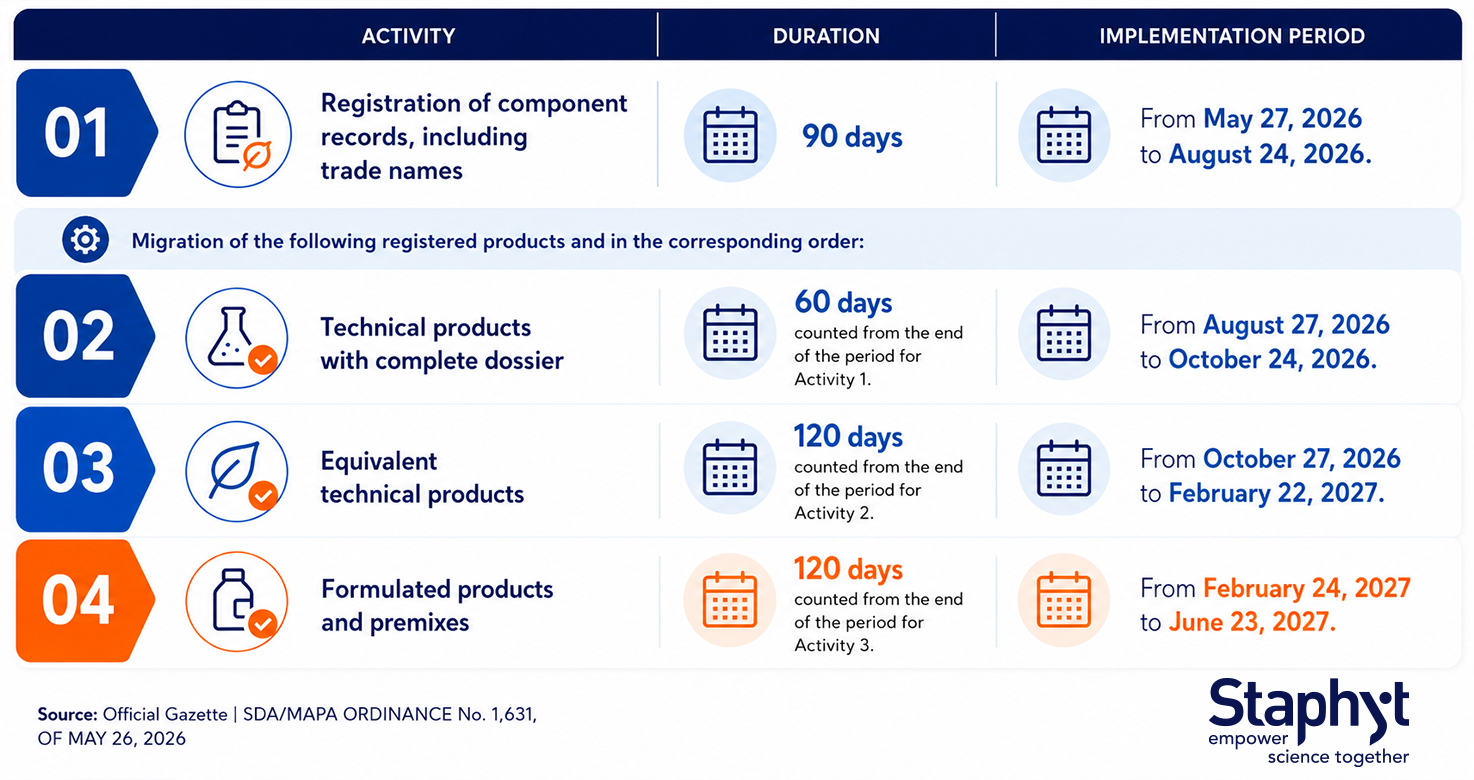
The Ordinance establishes a phased implementation schedule for the adoption of the system, covering different product categories and activities.
Implementation will occur in successive stages, allowing companies to complete registrations, migrate data, and submit new applications according to the deadlines established by MAPA.
Given this scenario, close monitoring of the implementation timeline and technical guidance will be essential to ensure an efficient transition.
What to Expect in the Coming Months?
The launch of SISPA represents a significant transformation in the way pesticide regulatory processes will be managed in Brazil.
More than just a new digital platform, the system establishes a new regulatory management framework based on data integration, information traceability, and greater standardization of procedures.
For companies in the sector, now is the time to prepare. Reviewing registrations, organizing technical documentation, evaluating internal workflows, and understanding the impacts of the new system will be essential steps to ensure compliance and business continuity.
How Can Staphyt Support Your Company?
The evolution of the regulatory landscape requires technical expertise, continuous monitoring of legislation, and extensive experience in registration management.
With a specialized Regulatory Affairs team composed of more than 40 qualified professionals, we support national and international companies throughout every stage of the regulatory lifecycle, from registration strategy development to post-registration management and compliance with new regulatory requirements.
The implementation of SISPA marks a new chapter for the industry. Being prepared from the outset is essential to ensure efficiency and reliability in regulatory operations, enabling the proper migration of existing processes and registered products, maintaining active registrations, and ensuring full compliance with applicable regulatory requirements.